BRIDGES for Dementia Network+

Rethinking how technology can help people with dementia live full, independent lives.

Our network brings together people with lived experience of dementia, researchers, designers and health professionals. We combine expertise from arts, health, social care and technology to co-design practical tools and experiences that support independence, connection and everyday life.

About Us

The BRIDGES for Dementia Network+ is a national research initiative led by the University of Sheffield. BRIDGES stands for Building Research Innovation co-Developing Greater Empowerment and Support for people living with Dementia.

Our aim is to explore how technology can support people with dementia to live full, connected and independent lives. Working across arts, health, social care and technology, we co-design solutions with people who have lived experience to ensure they are meaningful and usable.

We work across four themes

Indoor and outdoor spaces:

Using technology to make homes and public spaces easier to navigate and stay connected.

Arts, sports and culture:

Exploring creative technologies that support mood, memory and identity.

In-person and online communication:

Developing tools that make communication clearer and more meaningful.

Digital technology development and translation:

Ensuring new technologies are trustworthy, affordable and shaped with people living with dementia.

Join Our Launch Event

Thu 5 Feb 2026 10:30 AM – 1:30 PM
This is a free in-person event, with the option of joining remotely. Our room capacity is limited to 50 people so please request tickets. The hybrid element of the event will only be streamed up to 12:30pm.

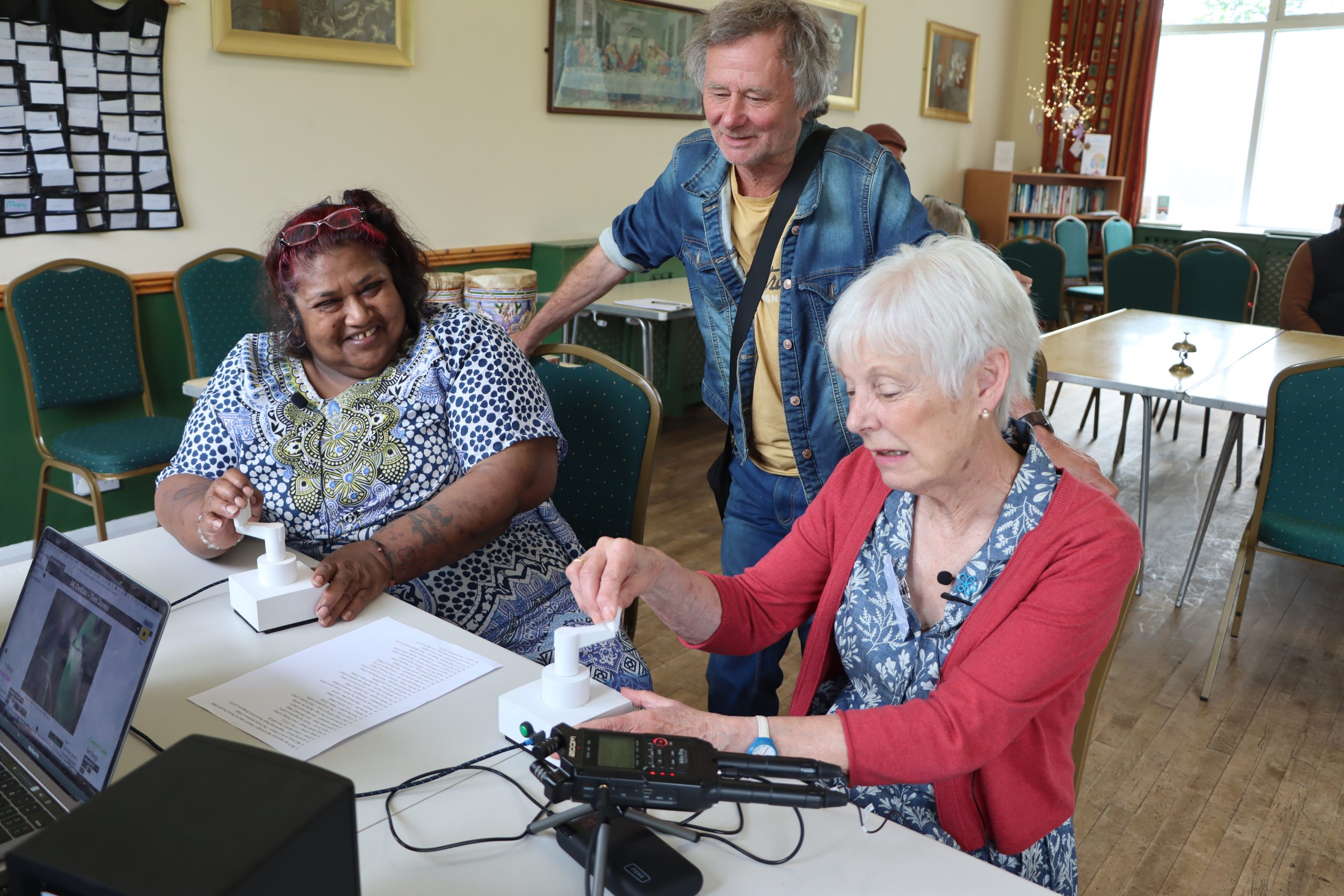
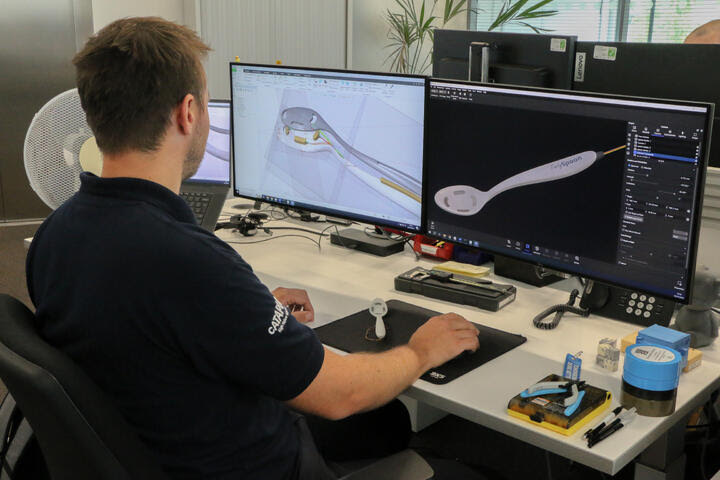
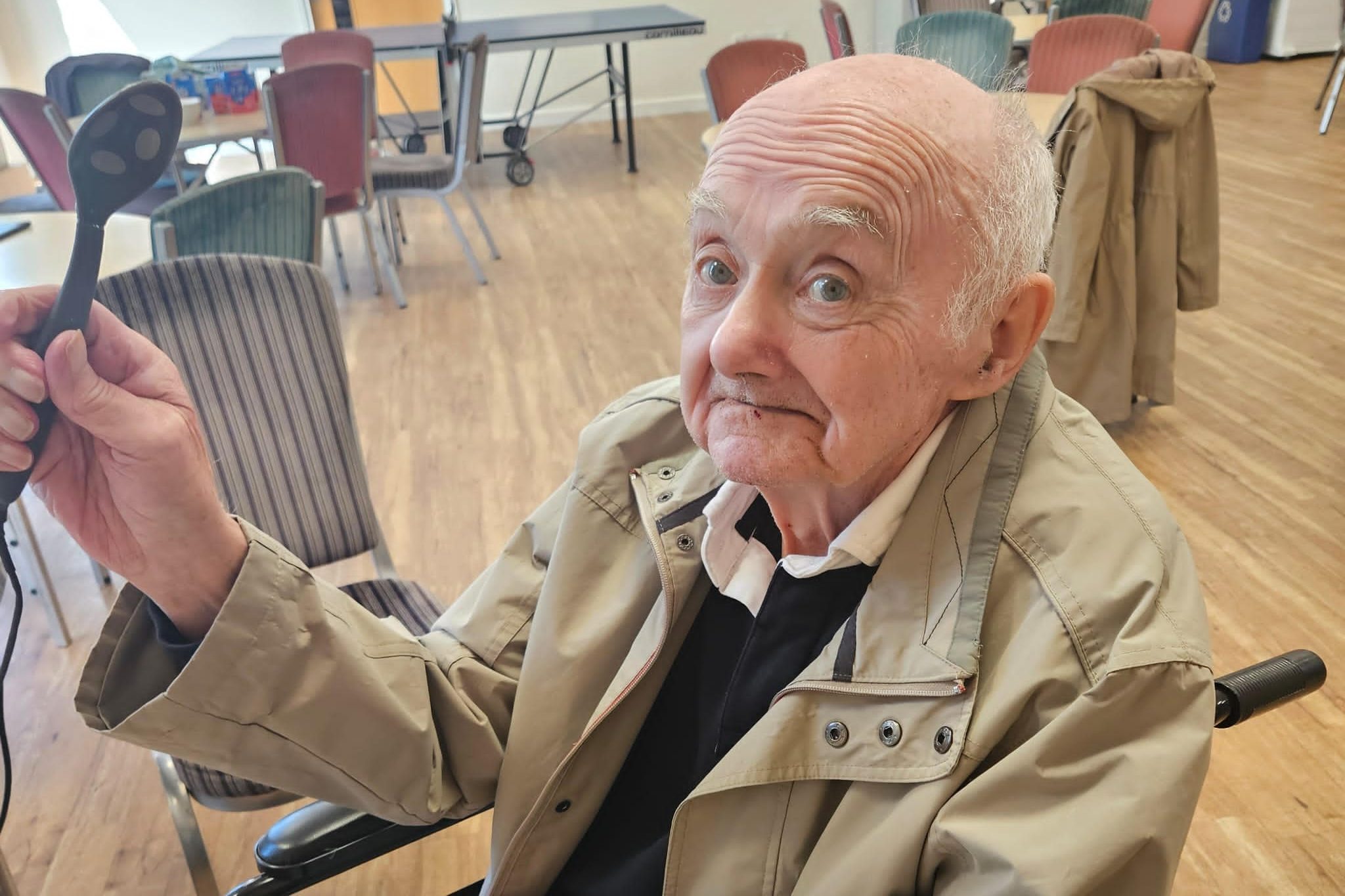
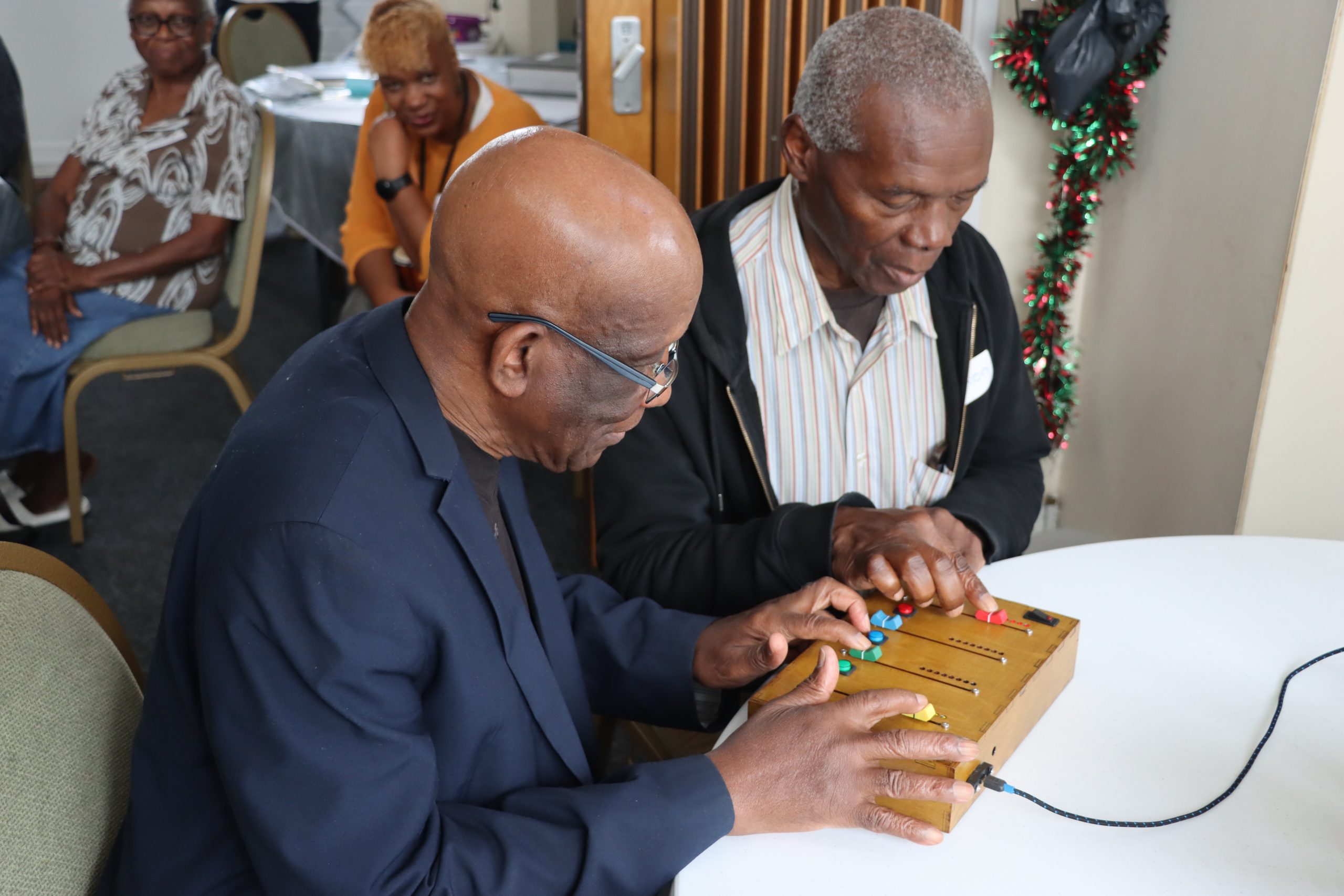
Images above are from various dementia related research activities undertaken by network members 

Equality, Diversity and Inclusion

We recognise dementia affects people differently depending on background, culture and life experiences. Our EDI work ensures the network reflects this diversity by:

  • Working directly with people from a wide range of communities
  • Partnering with The Lewy Body Society, Innovations in Dementia, Dementia UK and others
  • Running public and community events to highlight inequalities
  • Following recognised involvement standards to ensure people with lived experience are paid, trained and supported

Co-Design Activities

Everything we build is shaped with people living with dementia.

  • Year 1 – Discover: Identify real-life challenges and opportunities.
  • Year 2 – Create: Co-develop design briefs for new ideas and projects.
  • Year 3 – Shape the Future: Build a national research agenda for independent living with dementia.

Workshops will take place in universities, community settings and care environments, supported by creative labs and design specialists.

Training Early Career Researchers (ECRs)

We support the next generation of researchers by offering:

  • Lived Experience Masterclasses
  • Training in co-design and inclusive practice

These activities build skills in ethical, participatory and community-engaged research.

People

Dr. Jennifer MacRitchie

Director, BRIDGES for Dementia Network+
School of Languages, Arts and Societies, University of Sheffield

Jennifer’s research focuses on participatory approaches to co-designing new music technologies with people living with dementia.

j.macritchie@sheffield.ac.uk

Prof. Li Su

Co-Director, BRIDGES Network+
School of Medicine and Population Health, University of Sheffield

Su Li’s research combines innovative and original computational methods with the state-of-the-art brain imaging techniques to develop treatments and care for neurological and psychiatric conditions.

l.su@sheffield.ac.uk

Dr. Daniel J Blackburn

Senior Lecturer and Honorary Consultant Neurologist, SITraN, University of Sheffield

Daniel develops scalable, non-invasive diagnostic tests for early dementia, including automated language assessment and EEG-based tools.

d.blackburn@sheffield.ac.uk

Dr. Roger Whitham

Lecturer in Interaction Design, Lancaster University

Roger is a designer and researcher specialising in digital, physical and collaborative interaction, with recent work focusing on community-co-designed tools.

r.whitham@lancaster.ac.uk

Dr. Joseph Lindley

Senior Research Fellow, Lancaster University

Joseph’s UKRI Future Leaders Fellowship explores leadership in Design Research, with a focus on how people, society and technology evolve together.

j.lindley@lancaster.ac.uk

Prof. Huiyu Zhou

Professor of Machine Learning, University of Leicester

Huiyu’s research sits at the interface of AI and Machine Learning and biomedical image processing

hz143@leicester.ac.uk

Assoc. Prof. Hua Zhong

Associate Professor, London South Bank University

Hua specialises in sustainable building technologies and environmental control, researching how these influence spaces for ageing and dementia.

hua.zhong@lsbu.ac.uk

Prof. Chee Siang (Jim) Ang

Professor of Human-Computer Interaction, University of Kent and Kent & Medway Medical School

Jim designs and deploys digital technologies such as VR, AR and sensing systems to improve healthcare and wellbeing.

C.S.Ang@kent.ac.uk

Dr. Giovanni Masala

Senior Lecturer in Computer Science, University of Kent.

Giovanni’s research interests include AI and computer vision in healthcare and assistive technologies; cognitive systems to create the next generation of smart robots; and Human-Robot Interaction (HRI)

g.masala@kent.ac.uk

Dr. Christian Morgner

Senior Lecturer in Cultural and Creative Industries in the University of Sheffield’s Management School

Christian’s research lies within fields like complexity studies, network analysis and creative practices, with a particular focus on diversity and inclusivity

c.morgner@sheffield.ac.uk

Dr Ming Hung Hsu

Senior Research Fellow at ARU’s Cambridge Institute for Music Therapy Research

Ming’s research focuses on music therapy for managing neuropsychiatric symptoms of dementia.

ming-hung.hsu@aru.ac.uk

Prof. Anna Korhonen

Professor of Natural Language Processing at the University of Cambridge

Anna co-directs the Language Technology Laboratory (LTL). She is particularly interested in human-centric AI that draws on the understanding of human cognitive, social and creative intelligence and focuses applications aimed at social and global good.

alk23@cam.ac.uk

Prof. Tao Cheng

Professor of GeoInformatics in the Department of Civil, Environmental, and Geomatic Engineering at University College London

Tao’s interdisciplinary expertise spans AI and big data, network complexity, Geographical Information Science (GISci), and smart cities.

tao.cheng@ucl.ac.uk

Dr. Neil Lowrie

BRIDGES Network Manager

Neil brings experience of pre-award grant applications and post-award grant management, such as the recently concluded Transforming Foundation Industries Network+.

neil.lowrie@sheffield.ac.uk

Mailing List

Subscribe

* indicates required
(if applicable)
(This will help us notify you of relevant events)

Intuit Mailchimp